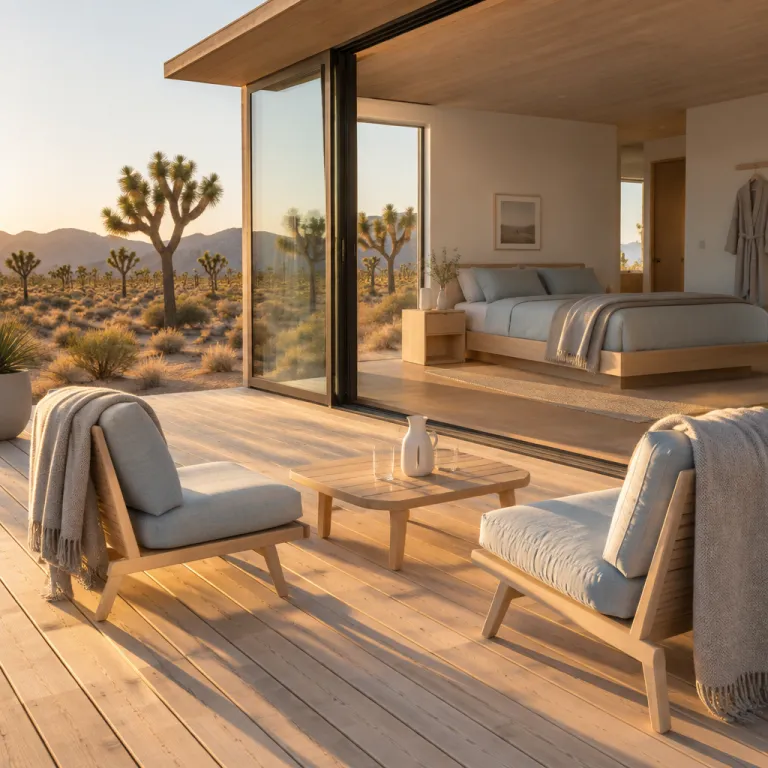
Choosing Joshua Tree lodging for a refined desert escape
Joshua Tree lodging attracts travelers who want silence, stars, and style. In this high desert region of Southern California, the best places to stay balance raw landscape with polished comfort, creating a strong sense of retreat. The right place to stay shapes every image you carry home from Joshua Tree National Park.
Most guests split their stay between the gateway town of Joshua Tree and the neighboring communities of Yucca Valley and Twentynine Palms. Each town offers a different profile, from creative cabins near the west entrance to quiet compounds close to the north entrance of Joshua Tree National Park. When you check prices across these locations, you will notice that houses with a private hot tub or pool command a premium, especially within a few minutes of a park entrance.
Luxury travelers often choose architect-designed house rentals that sleep guests in generous suites, with panoramic desert views and curated outdoor lounges. These refined places to stay in Joshua Tree, California, usually sit on larger plots of land, so staying there feels more like a private lodge than a simple rental. One recent guest described waking up to “nothing but boulders, Joshua trees, and sky in every direction,” a reminder that the most memorable stays combine privacy, dark skies, and immediate access to outdoor trails without driving back into town.
Where to stay Joshua Tree: town by town for luxury seekers
Choosing where to stay in Joshua Tree depends on how you plan to use the park and nearby towns. The village of Joshua Tree offers the closest access to the west entrance of the national park, with characterful houses and design-forward lodges scattered in the desert just a few minutes from cafés and galleries. This area suits travelers who want to walk around town after a day in the park, then retreat to a quiet place to stay with a hot tub under the stars.
Twentynine Palms sits near the north entrance of Joshua Tree National Park and appeals to guests who value calm streets and wide-open desert views. Here, Joshua Tree lodging often includes low-slung houses that sleep guests in two or three bedrooms, with outdoor firepits and pool or hot tub options that stay warm even on cool desert nights. Staying in Twentynine Palms often means shorter drives to sunrise trailheads and easier last-minute availability at slightly softer prices than in Joshua Tree town.
Yucca Valley lies west of Joshua Tree and offers a different location profile, with larger properties and easier access to Palm Springs and the wider Coachella Valley. Many luxury travelers use Yucca Valley as a base for a single lodge stay strategy, spending one full week in a single high-end property rather than hopping between several hotels, which aligns with the philosophy explained in this guide to a single lodge stay for a deeper trip. From Yucca Valley, you can reach the park in around twenty to thirty minutes, then return to a spacious house with a hot tub, generous outdoor decks, and enough room to sleep guests who are traveling as a group.
Luxury features that define premium Joshua Tree lodging
High-end Joshua Tree lodging focuses on three pillars: landscape, wellness, and privacy. The best houses are oriented so that every window frames a sculptural Joshua tree or a sweep of boulders inside or near the national park boundary. This careful positioning means that even a simple breakfast on the terrace becomes a memorable moment, with an image of the desert that feels cinematic.
Wellness features are now standard at the top end, with almost every premium place to stay offering either a hot tub, a plunge pool, or access to nearby hot springs for guests who want deeper relaxation. Some properties near Desert Hot Springs or Palm Springs combine naturally heated mineral water with spa-style facilities, while still keeping driving times to the park entrance under sixty minutes. For travelers who value restorative stays, the main advantages of wellness-focused houses include better sleep, slower mornings, and a more balanced rhythm between outdoor adventure and indoor calm.
Privacy remains the defining luxury in this part of California, where many guests come specifically to escape city lights and noise. Premium houses that sleep guests on larger parcels often advertise their distance from the nearest neighbor in meters, underlining how secluded the stay will feel. Families planning a refined wild west–themed escape also appreciate fenced outdoor areas, so children can play safely while adults enjoy the hot tub or stargazing deck after dark, perhaps planning the next day with the help of a detailed property map that elevates a luxury family stay.
Comparing Joshua Tree hotels and private houses
Travelers choosing between Joshua Tree hotels and private houses should think carefully about service, space, and style. Hotels in town or near Palm Springs usually offer staffed reception, on-site dining, and sometimes shared pool or hot tub facilities, which suit guests who prefer traditional hospitality. By contrast, a private Joshua Tree house stay near the national park gives you more control over your schedule, more outdoor space, and often a better sense of immersion in the desert.
Prices for Joshua Tree lodging vary widely, with compact houses that sleep guests in one bedroom starting lower, and expansive compounds with a hot tub, pool, and curated outdoor lounges commanding significantly higher nightly rates. As a rough guide, stylish one-bedroom casitas can start around $250–$350 per night in shoulder seasons, while larger three to four-bedroom estates with a pool, hot tub, and strong design credentials often range from $700 to well over $1,500 per night, depending on timing and exact location. When you check prices, pay attention to cleaning fees, minimum stay rules, and any extra charges for using the hot tub or heating the pool, especially in cooler months.
Some travelers prefer to split their time, spending a few nights in hotels in Palm Springs or Desert Hot Springs before moving to a house closer to the park entrance. This hybrid approach allows you to enjoy spa facilities and hot springs in town, then shift to a quieter place to stay near the north entrance or west entrance of Joshua Tree National Park. For many repeat visitors, though, the deepest connection to the landscape comes from staying in a single well-chosen house where the desert, the night sky, and the rhythm of the day feel uninterrupted.
Iconic nearby experiences : Pioneertown, Palm Springs, and hot springs
One of the great advantages of Joshua Tree lodging is the easy access to characterful nearby destinations. Pioneertown, a former film set turned living wild west–style town, sits only about twenty to thirty minutes from many houses in Yucca Valley and Joshua Tree. Staying within this radius means you can enjoy live music at Pappy and Harriet’s, then return to a quiet house with a hot tub and wide-open desert views.
Palm Springs lies to the southwest of the high desert and offers a very different image of desert life, with mid-century architecture, palm-lined streets, and full-service hotels. Many luxury travelers choose a location that allows day trips to Palm Springs for dining and shopping, while still keeping their primary stay close to the national park. This balance between urban polish and raw desert landscape is one of the key advantages of staying in the wider Joshua Tree region rather than in a single resort town.
Desert Hot Springs, north of Palm Springs, is renowned for its mineral-rich hot springs and spa hotels, which pair well with a more secluded house stay near Joshua Tree. Guests often spend a day soaking in geothermal pools before returning to their own pool or hot tub at a private property that sleeps guests in comfort. For travelers who care about the impact of their trip, it is worth exploring how some lodges now embrace regenerative tourism in practice, restoring native plants and reducing water use across their outdoor spaces.
How to choose the right Joshua Tree lodging for your trip
Selecting the right Joshua Tree lodging starts with clarifying your priorities: proximity, privacy, or amenities. If you plan to enter the national park at sunrise or sunset every day, look for a place to stay within twenty minutes of either the west entrance near Joshua Tree town or the north entrance near Twentynine Palms. Travelers who value quiet above all else may prefer more remote houses in Yucca Valley or the outskirts of Twentynine Palms, where the main benefits include darker skies and fewer passing cars.
When you check prices, compare not only nightly rates but also what each property includes for outdoor living. A house that sleeps guests in three bedrooms with a hot tub, shaded terrace, and wind-protected firepit may offer better overall value than cheaper places to stay without these features, especially for groups. Look closely at each listing’s image gallery to understand how the house relates to the surrounding desert, how close neighbors are, and whether the pool or hot tub faces open land or other buildings.
Finally, consider how your Joshua Tree stay choices affect the fragile desert ecosystem that makes this region so special. Choose properties that respect water limits, protect native Joshua tree stands, and manage outdoor lighting to preserve the night sky around the national park. By aligning your lodging decisions with these values, you help ensure that future guests can enjoy the same great views, quiet trails, and wild west horizons that define this remarkable corner of the California desert.
Key statistics about Joshua Tree travel and lodging
- The National Park Service reports that Joshua Tree National Park receives around three million visitors annually, making it one of the most visited desert parks in the United States and driving strong demand for lodging in Joshua Tree, Yucca Valley, and Twentynine Palms (National Park Service, annual visitation statistics, 2023, https://irma.nps.gov/STATS/Reports/Park/JOTR).
- According to Visit California data, average daily hotel prices in the Greater Palm Springs and high desert region have risen by more than 20 percent over the past five years, reflecting increased interest in premium desert stays with amenities such as a hot tub or pool (Visit California, tourism and lodging trend reports, 2023, https://industry.visitcalifornia.com/research).
- Research from DarkSky International, formerly the International Dark-Sky Association, notes that more than 80 percent of people in North America cannot see the Milky Way from their homes, which explains why remote houses that sleep guests under darker skies near the north entrance and west entrance of Joshua Tree National Park are especially sought after (DarkSky International, light pollution studies, 2016, https://www.darksky.org/light-pollution/).
- Studies from the U.S. Geological Survey highlight that the Mojave Desert, including the Joshua tree habitat, has experienced significant warming over recent decades, reinforcing the importance of choosing lodging that uses water-efficient landscaping and responsible outdoor lighting (U.S. Geological Survey, climate and desert ecosystem research, 2015, https://pubs.usgs.gov/fs/2015/3080/).
Frequently asked questions about Joshua Tree lodging
What is the best area to stay near Joshua Tree National Park ?
The best area depends on your priorities, but most luxury travelers choose between Joshua Tree town near the west entrance, Twentynine Palms near the north entrance, and Yucca Valley for larger houses and easier access to Palm Springs. Joshua Tree town offers the most characterful cafés and galleries, while Twentynine Palms provides quieter streets and faster access to sunrise trailheads. Yucca Valley suits guests who want more space, lower prices, and a central base for exploring both the park and the wider Coachella Valley.
How far are most rentals from the park entrances ?
Many premium houses in Joshua Tree and Yucca Valley sit within fifteen to thirty minutes of the west entrance, depending on exact location and traffic. Properties in Twentynine Palms often lie within ten to twenty minutes of the north entrance, making them convenient for early morning hikes. When booking, always check the stated driving time to the national park and confirm it on a map, especially if sunrise or sunset visits are important to your stay.
Are hot tubs and pools common in Joshua Tree lodging ?
Hot tubs are very common in mid to high-end Joshua Tree lodging, while full-size pools or plunge pools are more frequent in larger houses and luxury properties. Many guests consider a hot tub essential for stargazing and relaxing after long days in the desert. Because water is scarce, look for properties that manage their pools and hot tubs responsibly, with clear maintenance and conservation practices.
Is it better to stay in a hotel or a private house ?
Hotels in Palm Springs, Desert Hot Springs, and some parts of Yucca Valley work well for travelers who want on-site dining, daily housekeeping, and spa-style services. Private houses near Joshua Tree town or Twentynine Palms suit guests who value privacy, outdoor space, and a stronger connection to the desert landscape. For longer trips or group travel, a house that sleeps guests comfortably and offers a hot tub, firepit, and shaded terraces usually provides better value and a more immersive experience.
How far in advance should I book Joshua Tree lodging ?
For peak seasons such as spring wildflower months and major holiday periods, it is wise to book Joshua Tree lodging at least three to six months in advance, especially if you want a specific location or a house with a hot tub and strong design credentials. Midweek stays and hotter summer periods often have more flexibility, but the most distinctive places to stay still fill early. Always check prices across several dates and adjust your stay length or arrival day if you need to balance budget with your preferred level of comfort.