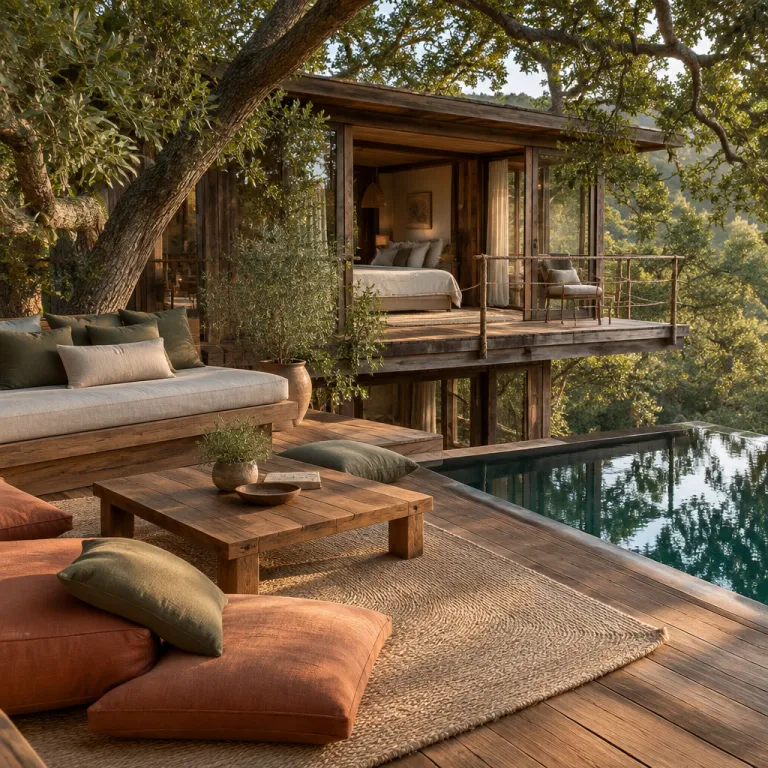
The design logic of elevation in treehouse lodge luxury canopy accommodation
Sleep a few metres above the forest floor and the entire lodge experience changes. At the heart of true treehouse lodge luxury canopy accommodation is a simple design move that lifts guests into the canopy, away from ground level noise and closer to the quiet pulse of the forest. That shift in level reframes every view, every sound, and every stay for families who want both comfort and a sense of adventure.
Architects working on a modern treehouse lodge start by mapping wind patterns, bird corridors, and river lines before they position a single tree house platform. Elevation lets a luxury treehouse catch cooler breezes in tropical jungle regions, while floor to ceiling glazing turns the canopy into a living mural rather than a distant backdrop. When a treehouse hotel is built with this sensitivity, the main lodge becomes a hub on the forest floor, while the tree houses feel like private observatories suspended between sky and river.
From Scandinavia to the Amazon rainforest, the best treehouse hotels use height to choreograph how guests move and feel. A family might cross suspension bridges from the main lodge to a treehouse resort suite, pausing to watch a river gorge or a village clearing far below. Children register the thrill of being above the river edge, while parents appreciate that this level of immersion in the forest still comes with a queen bed, hot tub, and a calm, controlled sense of safety.
From rustic platforms to refined family sanctuaries in the trees
The first generation of treehouses in the travel world were often little more than wooden decks with a roof and a view. Today, treehouse lodge luxury canopy accommodation has evolved into a category where a treehouse hotel can rival high end city hotels for comfort, while keeping the raw drama of the jungle or forest intact. This evolution matters for families, because it means a stay in the trees no longer requires sacrificing sleep quality or privacy.
In a well considered luxury treehouse, the layout feels more like a small house than a cabin, with separate sleeping zones so children and adults can unwind at their own pace. Designers now integrate floor to ceiling windows, proper insulation, and discreet climate control, so guests can listen to the river or forest without battling humidity or cold. Bathrooms have shifted from shared blocks at ground level to en suite spaces with an outdoor shower screened by the canopy, letting parents keep an eye on children while still feeling that rare, elevated seclusion.
Families weighing whether to book one lodge or several on a longer trip often find that a single treehouse resort rewards a slower rhythm. Spending a week in one elevated setting, rather than hopping between hotels, allows children to map every suspension bridge and every path between the main lodge and their own tree house retreat. For a deeper look at why this one place for one week approach works so well for premium travellers, see this analysis of the single lodge stay strategy in recent lodge stay coverage.
Regional expressions: from Amazon river edges to Scandinavian pines
Treehouse lodge luxury canopy accommodation looks very different in the Amazon rainforest than it does in a Scandinavian pine forest or a Costa Rica cloud forest. In the Amazon, a treehouse lodge often lines up along a river edge or blackwater creek, each tree house angled for a view of the water where pink dolphins surface and macaws cross at dawn. Here, the jungle is dense and the canopy high, so architects use tall stilts and careful bracing to keep treehouses above seasonal floods while still feeling anchored to the forest floor.
In Costa Rica, a luxury treehouse might sit just above a gorge where a river drops through volcanic rock, with suspension bridges linking clusters of tree houses like a quiet aerial village. Families wake to howler monkeys at canopy level, then walk down to the main lodge for breakfast before heading into a nearby national park for guided wildlife walks. The best treehouse hotels in these regions understand that guests want both the drama of the jungle and the reassurance of thoughtful safety measures, from rail heights to non slip decking.
Far to the north, Scandinavian treehouses lean into minimalism and light, often built among birch and pine with pale timber interiors and precise floor to ceiling glazing. Snow muffles sound at ground level, so the elevated lodge suites feel like lanterns in the trees, with a hot tub sunk into a deck and a queen bed positioned for a view of the night sky. Families used to indoor waterparks and large scale resorts can compare this quieter, design led approach with more conventional family properties by reading the in depth review of Great Wolf Lodge Wisconsin Dells for luxury minded families on lodge stay.
Engineering the canopy: how treehouses stay light on the land
Behind every serene treehouse lodge luxury canopy accommodation photograph lies a serious piece of engineering. Building a lodge above the forest floor means balancing structural integrity with minimal impact on the trees and soil that make the setting so special. Engineers work with arborists to understand how each tree grows, then design flexible joints and cable systems that allow a tree house to move slightly as trunks expand and sway.
Many contemporary treehouse hotels use a hybrid approach, with some loads carried by independent stilts and others by carefully clamped tree connections that avoid penetrating living tissue. This lets a luxury treehouse sit at canopy level without strangling or overburdening the host trees, a crucial point in sensitive environments such as the Amazon rainforest or riverine forest near a national park. In steep terrain, like the slopes above a gorge or the hills around Primland Resort in Virginia, architects sometimes step the lodge structures down the hillside, so guests feel suspended while the building remains firmly grounded.
Inside, the engineering story continues in quieter ways that families notice only subconsciously. Floor to ceiling glass must be carefully braced against wind, while decks with a hot tub or outdoor shower require extra reinforcement and smart drainage so water never weakens the structure. When you are booking treehouse stays for children, look for clear information about how the tree houses were built, how access works after dark, and how the main lodge manages weather events, because these details separate the best properties from the merely photogenic.
Family psychology in the treetops: why children love elevated stays
Ask a child to sketch their dream lodge and the odds are high that a treehouse appears somewhere in the drawing. Treehouse lodge luxury canopy accommodation taps into that instinctive sense of play, turning a standard hotel stay into something that feels like a storybook adventure without compromising on safety or comfort. For parents, the challenge is finding treehouses that balance this excitement with calm, well planned interiors where everyone can actually rest.
Designers who specialise in family friendly treehouse hotels think carefully about how children move through space at different ages. Wide, well lit paths between the main lodge and each tree house, solid railings on suspension bridges, and clear sightlines from a queen bed to a child’s sleeping nook all help younger guests feel brave without being overwhelmed. Inside, layered lighting, natural materials, and a strong connection to the view mean that even on a rainy day in the jungle or forest, the lodge feels like a cosy lookout rather than a cramped cabin.
The canopy itself becomes a classroom for curious minds, especially in biodiverse regions such as the Amazon or Costa Rica. From a treehouse resort deck, children can watch birds at eye level, trace the path of a river below, and notice how life changes from forest floor to canopy level over the course of a stay. Families who value this kind of slow, observational travel often gravitate to properties that, like those profiled in lodge stay’s coverage of Mexico’s luxury moment, treat the landscape as the main amenity rather than an afterthought.
How to choose the right treehouse lodge for your family
Finding the right treehouse lodge luxury canopy accommodation for a family trip starts with clarifying what you want the landscape to do for you. If your children are fascinated by wildlife, a lodge near a national park or deep in the Amazon rainforest will offer richer canopy level encounters than a property on the edge of a village. If you prefer gentle walks and river views to intense jungle humidity, a treehouse hotel above a gorge or along a temperate river edge might be the better fit.
When you are booking treehouse stays, read beyond the headline images and look closely at floor plans and access routes. Check whether the tree houses are connected to the main lodge by suspension bridges, stairs, or level walkways, and consider how that will feel at night with tired children. Pay attention to details such as whether each tree house has an outdoor shower or hot tub, how many guests can sleep comfortably in real beds, and whether the queen bed faces a meaningful view or just another structure.
Finally, treat a treehouse resort or lodge the way you would any serious luxury property, weighing service, design, and setting together. The best treehouse hotels understand that families need flexible dining, thoughtful activity planning, and clear communication as much as they need dramatic canopy platforms and floor to ceiling glass. When a property gets all three right, a stay in the trees stops being a novelty and becomes a new benchmark for how luxury hotels can connect guests to the landscapes they came to see.
FAQ
What makes a treehouse lodge different from a regular luxury hotel for families ?
A treehouse lodge places guest suites at canopy level rather than on the forest floor, which changes light, sound, and privacy in ways a standard hotel cannot match. Families gain a stronger connection to wildlife and landscape, while still enjoying amenities such as a queen bed, hot tub, and well designed bathrooms. The main lodge usually anchors services at ground level, with tree houses acting as elevated, more private satellites.
Is a treehouse resort safe for young children ?
Well run treehouse resorts are engineered with strict safety standards, including solid railings, non slip surfaces, and carefully lit paths or suspension bridges. Parents should review photos and floor plans before booking treehouse stays, checking how far each tree house is from the main lodge and how bedrooms are arranged. Choosing properties that explicitly welcome families often ensures extra safety measures and more attentive staff.
How do I choose between Amazon rainforest, Costa Rica, or other regions for a canopy stay ?
The Amazon rainforest offers intense biodiversity and dramatic river systems, ideal for families focused on wildlife and jungle immersion. Costa Rica balances jungle, river gorge landscapes, and access to national parks with strong guiding and family friendly infrastructure. Cooler forest regions, such as Scandinavia or mountain lodges like Primland Resort, prioritise light, silence, and views over dense jungle, which some families find more restful.
What should I look for in the design of a luxury treehouse ?
Key design elements include floor to ceiling windows for a meaningful view, logical circulation between the main lodge and tree houses, and robust materials that handle weather gracefully. Inside, look for clear separation between sleeping areas, good sound insulation, and details such as an outdoor shower or hot tub that make the canopy feel like part of daily life. A well designed luxury treehouse should feel playful for children yet composed and restful for adults.
Are treehouse hotels suitable for longer stays, or just short novelty trips ?
Many contemporary treehouse hotels are built for extended stays, with generous storage, comfortable seating, and layouts that work for families over several nights. Staying longer in one lodge allows guests to notice how the forest or river changes from day to day, which is part of the appeal of treehouse lodge luxury canopy accommodation. For families, this slower rhythm often proves more restorative than moving between multiple hotels in quick succession.
Sources
National Geographic Travel ; Condé Nast Traveler ; Travel + Leisure.