From game drive to table: how bush dinners redefine safari lodge cuisine
From game drive to table: how bush dinners redefine safari lodge cuisine
The most memorable bush dinner on safari rarely starts at the table. It usually begins at the tail end of a late afternoon game drive, when the light softens over the African bush and the guide quietly checks the wind for wildlife. By the time your vehicle noses into a clearing near a discreet watering hole, the scene is set for an intimate bush dining ritual that feels like a secret shared rather than a scheduled meal.
Across Kenya, the Sabi Sands and the greater Masai Mara, leading safari lodges now treat the bush dinner as a fully fledged dining experience rather than a novelty add on. Chefs and guides coordinate game drive timings so that guests arrive just as the open fire is catching, the lanterns are lit and the first aromas of an African safari feast drift through the grass. At Singita in the Sabi Sands, for example, couples might step off the vehicle to find a linen dressed table beside a dry riverbed, while in Kenya’s Olare Motorogi Conservancy, Mara Plains Camp often sets up in a clearing where elephants have passed earlier that day. This choreography turns a simple dinner into an unforgettable experience that couples remember long after the last embers fade into the night sky.
Logistics are quietly complex behind this seemingly effortless safari experience. Teams pre build mobile kitchens, position safety vehicles and liaise by radio to ensure that every bush dinner respects wildlife corridors and national park regulations. Guides follow park rules on maximum group size and noise levels, and many lodges avoid sensitive areas such as known den sites or seasonal nesting grounds. The result for guests is a sense of ease and time suspended, where the only decisions required are whether to linger by the fire with another glass of South African red or step away for a moment of silence under the stars.

Fire, tools and safety: the craft behind cooking in the African bush
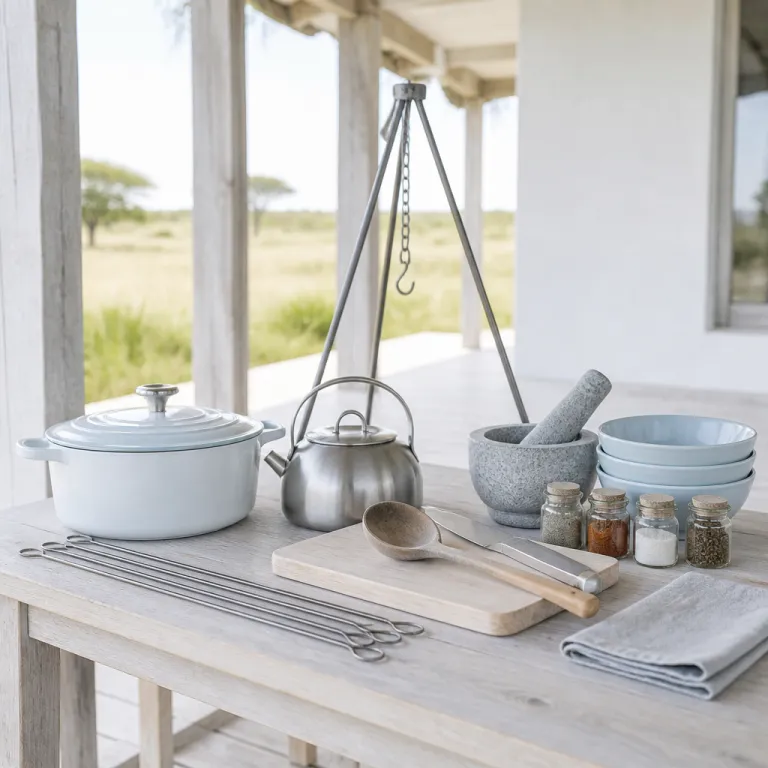
Cooking a refined meal in the middle of the African bush is a technical exercise as much as a romantic one. Safari lodge chefs rely on charcoal jikos, Dutch ovens and heavy cast iron pots to hold steady heat over an open fire while game drives run late and guests arrive on bush time. For travelers who love equipment, the same philosophy of durable cookware is explored in depth in our guide to premium cast iron cookware for lodge style cooking, which mirrors what many earth lodge kitchens use behind the scenes.
On a typical Kenya Tanzania itinerary, you might experience several different bush dinners and boma fires, each with its own choreography of safety and spectacle. Staff sweep the area before guests arrive, position lanterns to mark safe paths and keep a vehicle idling just beyond the glow of the fire in case wildlife wanders too close. When guests ask whether bush dinners are safe, the most accurate answer remains the one used by seasoned operators on the ground: "Are bush dinners safe? Yes, conducted in secure environments with safety measures in place." In the Masai Mara, for instance, many lodges suspend remote bush dinners during the long rains when black cotton soil becomes difficult for vehicles and safe evacuation would be harder.
Fire management is both art and science during a bush dining experience. Chefs build separate open fire zones for fast searing of game meat, slow simmering of stews and gentle warming of sauces, adjusting wood types and ember depth as the night sky darkens. This layered approach allows them to serve a multi course meal in the middle of the Masai Mara or a remote national park clearing with the same precision you would expect from an urban fine dining restaurant.
Borrowed recipes and local stories: how culture shapes bush dining
The most compelling bush dinner uses recipes as a form of storytelling. In Kenya, a simple ugali and sukuma wiki served beside grilled game can open a conversation about farming traditions, while in the Sabi region a pot of slow cooked oxtail might carry Zulu influences passed down through lodge kitchen teams. Across the Masai Mara and other corners of Kenya Tanzania, local communities and safari lodge chefs collaborate so that each meal reflects the landscape rather than masking it.
Many African safari properties now treat their boma as a kind of open air theatre, where borrowed recipes and family dishes are introduced between courses. A Maasai elder might explain the significance of certain herbs used to season goat, while a young chef describes how they learned to adapt a traditional stew for guests who have spent long days on game drives. At some lodges in the Mara, women from nearby conservancy communities join the kitchen team on specific evenings to prepare chapati or pilau rice, sharing how these dishes mark celebrations at home. This is where the word experience earns its place, because guests are not only eating in the bush but also learning how food, fire and story intersect in the African bush.
Operators report that this cultural depth changes how long couples choose to stay at safari lodges. When a lodge offers rotating bush dining experiences, hands on cooking sessions and a different style of boma dinner each day, guests often add extra days simply to follow the culinary arc. Over time, the safari experience becomes less about ticking off game sightings and more about the rhythm of meal, fire and conversation under the night sky.
From farm to boma: sourcing, wine and the architecture of the fire circle
Behind every polished bush dinner lies a quiet network of local farmers, kitchen gardens and regional wine estates. Many earth lodge style properties in the Sabi Sands now grow herbs and vegetables on site, supplementing them with seasonal produce from nearby communities to keep the dining experience rooted in place. This farm to table approach means that a simple salad served in the African bush can trace its ingredients to soil just a few hundred metres from the boma fire.
Wine programs have matured in parallel with these dining experiences, especially in southern and East Africa. A lodge in Kenya might pour crisp South African Chenin Blanc with grilled fish, then shift to a Swartland Syrah beside the open fire as guests share stories from the day’s game drives. In the Masai Mara, some safari lodges now cellar small allocations of European labels alongside African bottles, creating pairings that elevate a bush dinner from a special occasion to a genuinely unforgettable experience for serious wine focused travelers.
The physical design of the boma itself shapes how couples interact during a safari experience. Circular seating around the central fire encourages conversation between tables, while quieter corners near the edge of the African bush allow more private moments where the only soundtrack is the crackle of wood and distant calls from the national park. As one lodge training manual explains for new staff: "What is a boma dinner? A traditional African meal served around an open fire in an enclosed area."
Planning your own safari lodge bush dinner culinary experience
For couples planning an African safari, it is worth treating the bush dinner as a core part of the itinerary rather than an optional extra. When comparing safari lodges in Kenya, the Sabi Sands or the Masai Mara, look beyond room categories and ask specific questions about bush dining formats, private fire setups and how many different dining experiences are offered across several days. Properties that invest in varied boma layouts, flexible game drive timings and thoughtful menus tend to deliver a richer overall safari experience.
Specialist operators note that bush dinners now feature at a clear majority of high end lodges across sub Saharan Africa, and that strong culinary programming can extend average guest stays by one or two days. This aligns with broader luxury travel trends, where private chefs rank among the most requested amenities and hands on cooking classes are increasingly offered between safari day activities. On lodge stay platforms, articles such as our guide to refined comfort and premium lodge amenities show how food now sits alongside design and guiding as a primary decision factor.
When you book, share dietary preferences early so the team can tailor each meal and bush dinner without diluting its African character. Lodges routinely confirm that "Can dietary restrictions be accommodated? Yes, lodges typically cater to various dietary needs." Pack a warm layer for the night sky, be ready for flexible day to day timings around game drives and allow space in your schedule for one completely unstructured evening by the fire, where the only plan is to sit, listen and let the African bush write the final course of your trip.
FAQ
What exactly is included in a typical bush dinner at a safari lodge ?
A typical bush dinner at a safari lodge includes a full multi course meal served in the African bush, usually after an afternoon game drive. Guests are driven to a remote but secured site, where an open fire, lanterns and a temporary kitchen are already in place. Pre dinner drinks, a plated or buffet style main course and dessert under the night sky are standard, with staff and vehicles positioned discreetly for safety.
How do lodges keep guests safe during bush dining experiences ?
Lodges conduct detailed safety checks before any bush dining experience, including sweeping the area for wildlife, positioning vehicles nearby and maintaining radio contact with the main camp. Staff are trained to read animal behaviour and to adjust the location or timing of a bush dinner if game moves too close. Enclosed boma structures within or near the lodge are often used when conditions in the wider African bush are not suitable.
Are bush dinners suitable for guests with dietary restrictions ?
Most high end safari lodges can accommodate a wide range of dietary needs, from vegetarian and vegan to gluten free or allergy specific menus. Guests are encouraged to share requirements well before arrival so that chefs can adapt bush dinner menus without compromising flavour or cultural authenticity. On the night, staff will quietly guide you to suitable options and can often prepare separate dishes over the same fire.
How many bush dinners can I expect on a four day safari stay ?
On a four day stay at a typical African safari lodge, couples can usually expect one major bush dinner and one boma focused evening, with other nights spent in the main dining area. Some properties in Kenya and the Masai Mara offer more frequent outdoor meals, especially in dry seasons when the African bush is easier to access. When booking, ask how the lodge spaces out its special dinners across several days so you can plan game drives and downtime around them.
What should I wear and bring to a safari lodge bush dinner culinary experience ?
Evenings in the African bush can be cool, so bring a warm layer, closed shoes and a light scarf or jacket. Neutral colours remain best for game drives and transition well into a bush dinner setting around the fire. A small torch, a camera with a fast lens for low light and an open mind for trying local dishes will help you make the most of the experience.