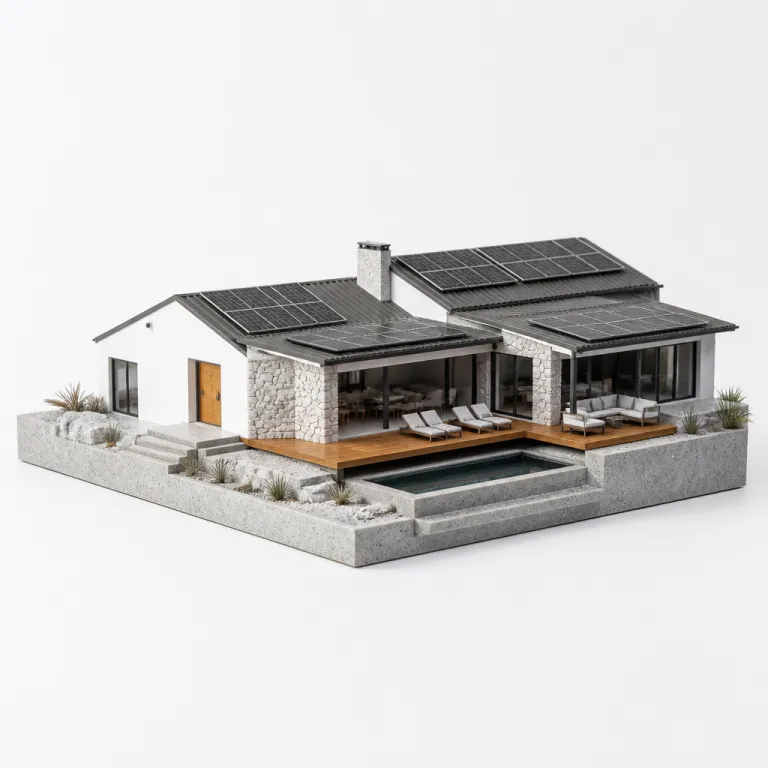
Off-grid luxury lodge solar power sustainability redefined
Off-grid luxury lodge solar power sustainability now signals refinement rather than sacrifice. In remote corners of South Africa, Alaska and rural Portugal, solar energy and discreet battery storage quietly replace the drone of diesel generators. The result is a new standard of sustainable living where guests sleep deeply, the grid stays distant and the night sky returns to centre stage.
At its core, an off-grid luxury lodge is a high-end retreat operating independently from any public grid system. As one industry definition puts it with precision: “A high-end accommodation operating independently from public utilities, using renewable energy sources.” This shift in energy systems is not a marketing flourish; it is a structural change in how power, water and management systems are designed from the ground up.
Solar panels now sit on that frontier between wilderness and comfort, feeding a carefully sized solar array that charges a dedicated battery bank. These batteries, often lithium-ion, form the heart of the energy storage strategy and keep the energy system stable through long nights or cloudy spells. Charge controllers, solar inverters and digital monitoring systems work together as quiet technologies, ensuring that every lamp, fan and induction hob is solar powered without guests ever hearing a generator start.
Operators such as Esiweni Luxury Safari Lodge in South Africa and Harmony Eco Lodge in Arizona illustrate how far this has progressed. Esiweni Lodge has publicly communicated that it aims to run its operations entirely on solar power, while Harmony Eco Lodge reports that its renewable energy system prevents roughly 200 tons of CO₂ emissions each year. These figures should always be checked against the latest information from the lodges themselves, but the direction of travel is clear. These are not experimental eco resorts; they are fully fledged luxury properties where sustainable tourism is embedded in the architecture, not bolted on as a third party certification badge.
From diesel drums to silent solar arrays in remote Africa
Across African wilderness areas, the old model of luxury meant diesel drums stacked behind the staff village. Today, the best lodges are replacing those drums with a carefully engineered solar array and a deep battery bank sized for genuine off-grid living. The environmental impact is immediate, but the change in guest experiences is even more striking.
Rhino Sands Safari Camp in South Africa operates as a self-sufficient camp, using solar energy systems and advanced energy storage to run everything from kitchen refrigeration to subtle pathway lighting. After sunset, solar powered lanterns and low-voltage LEDs draw from batteries charged during the day, so the bush soundtrack replaces the generator hum. The same pattern plays out at Ubuyu in Ruaha, where solar power and a private water system support a camp that has no air conditioning yet still feels resolutely luxurious.
At Jaci's Private Lodge in Madikwe, a post-rebuild commitment to solar power means operations are now largely powered by solar panels and supported by robust energy systems. Here, solar inverters and smart management systems balance loads between guest suites, back-of-house laundry and the main lodge, ensuring that power remains stable even during peak usage. For couples arriving from dense urban grid living, the silence at night and the clarity of the stars often become the most memorable luxury.
Mount Ceder Under Canvas in South Africa takes a slightly different path, leaning into glamping aesthetics with 70 m² canvas units and wood-fired hot tubs. While the hot tubs rely on wood rather than electricity, the surrounding camp infrastructure uses solar energy and efficient energy systems to keep lighting and water pumps running. This hybrid approach shows how glamping and eco resorts can blend low-tech pleasures with high-tech renewable energy systems to create sustainable tourism that still feels indulgent.
For readers wanting a broader view of premium eco resorts and sustainable tourism experiences, the in-depth guide to premium eco lodges worldwide and sustainable luxury experiences in nature offers a useful benchmark. It highlights how solar energy, water independence and local sourcing are becoming baseline expectations rather than niche selling points. Off-grid luxury lodge solar power sustainability is now part of a global movement, not an isolated experiment in a single valley.
Passive cooling, water independence and the new comfort codes
True off-grid luxury is not about replicating city infrastructure in the bush. It is about rethinking comfort through passive design, water independence and energy systems that respect the environmental context. In equatorial and semi-arid climates, this often starts with architecture rather than with more power.
At Ubuyu in Ruaha, the absence of air conditioning is not a cost saving measure; it is a design statement. Thick walls, deep verandas, high thatched roofs and carefully oriented openings create passive cooling that keeps suites comfortable even in the heat of the day. Ceiling fans, powered by solar energy and supported by a stable battery bank, move air gently without the harsh blast of compressors, while the lack of mechanical noise lets guests hear hyenas calling across the riverbed.
Water independence is the second pillar of this new comfort code, and it is where off-grid luxury lodge solar power sustainability becomes very tangible. Ubuyu runs on a private well with filtration, while many eco resorts now combine boreholes with rainwater harvesting systems and grey-water recycling. Pumps and filtration units are powered by solar energy systems, with inverters and charge controllers ensuring that the water system keeps running even when the sky is overcast for days.
Harmony Eco Lodge in Arizona offers a different landscape but similar principles, using a fully self-sustaining system that integrates solar panels, batteries and water conservation technologies. Here, the energy system is designed so that guests can enjoy long showers, efficient heating and reliable lighting without ever thinking about the grid. For couples used to conventional grid system comforts, this kind of sustainable living feels quietly radical, because luxury and environmental responsibility finally share the same room.
Natural material palettes also play a crucial role in this shift, especially in structures designed to age gracefully over 25 years or more. Timber, stone and lime plasters tend to appreciate in character as they weather, while synthetic finishes often depreciate visually and require more maintenance, energy and third party replacement over time. When combined with solar powered infrastructure and efficient management systems, these materials help lodges reduce both their environmental impact and their long-term operating costs.
The cost math of solar energy systems and long-term luxury
For many travellers, the question behind off-grid luxury lodge solar power sustainability is simple. Does all this solar technology, energy storage and water independence make a stay more expensive or more meaningful? The answer lies in the cost math that operators quietly run long before you arrive.
Installing a substantial solar array, a high-capacity battery bank and robust solar inverters requires a significant upfront investment. A typical remote lodge might install 80–150 kW of solar panels with 400–800 kWh of lithium-ion storage, representing a capital expenditure in the low to mid six-figure range depending on location and logistics. Yet once those systems are in place, the lodge eliminates most diesel fuel costs, reduces generator maintenance and cuts the logistical burden of trucking fuel along rough tracks. Over a decade, the savings on fuel, transport and third party servicing often outweigh the initial capital expenditure, especially in remote regions where diesel prices and delivery risks are high.
Harmony Eco Lodge, for example, reports that its renewable energy system prevents around 200 tons of CO₂ emissions annually, which also stabilises operating costs by decoupling the lodge from volatile fuel markets. Esiweni Luxury Safari Lodge, working towards 100 percent solar power for its operations, benefits from similar predictability in its energy system, allowing management to focus on guest experiences rather than on fuel deliveries. These properties show that energy systems built around solar power and batteries are not only environmentally sound but also commercially rational.
For guests, the financial implications are more nuanced than a simple price-per-night comparison. Some off-grid eco resorts may charge a premium to reflect their investment in renewable energy technologies and advanced management systems, while others keep rates competitive to broaden access to sustainable tourism. Either way, the value proposition shifts from unlimited air conditioning and oversized pools to thoughtful design, local sourcing and a lighter environmental impact.
When you book a stay at a property such as Vale das Estrelas in Portugal, you are effectively investing in a model of sustainable living that treats energy, water and waste as interconnected systems. The lodge’s use of solar panels, batteries and efficient water systems reduces its environmental impact while maintaining a high level of comfort. Over time, this approach proves that luxury and responsible resource management can share the same ledger without compromising either side.
Guest perception shift: from deprivation to innovation
Not long ago, the phrase “off-grid” suggested cold showers and flickering lights. Now, off-grid luxury lodge solar power sustainability signals innovation, privacy and a more intimate relationship with the landscape. Guests arrive expecting reliable power, hot water and refined service, and the best lodges quietly exceed those expectations.
Operators report that couples increasingly ask specific questions about solar energy, battery storage and water systems before booking. As one clear answer from the field notes: “How do off-grid lodges ensure luxury amenities? By integrating advanced renewable energy systems and sustainable practices without compromising comfort.” This curiosity reflects a broader shift in sustainable tourism, where travellers want to understand how energy systems, water management and local sourcing actually work on the ground.
At Kodiak Raspberry Island Remote Lodge in Alaska, off-grid living is part of the narrative, with solar panels, batteries and local water systems supporting a wilderness experience that still feels indulgent. Guests may tour the energy system, learning how solar power, charge controllers and inverters keep cabins warm and lights steady through long northern nights. The lodge’s approach shows that transparency about energy systems can deepen, rather than diminish, the sense of luxury.
Zero-waste kitchens are another area where perception has shifted from hair-shirt to high-end. Ubuyu’s zero-waste kitchen, for instance, uses composting, local ingredients and a strict avoidance of single-use plastics to create menus that feel both generous and grounded. When the kitchen is powered by solar energy and supported by efficient management systems, every plate that reaches the table carries a smaller environmental impact without sacrificing flavour or presentation.
For couples planning a romantic escape, this new definition of luxury often includes the ability to unplug from the grid system without giving up comfort. Properties like Stone Creek Lodge, profiled in detail in the guide to refined mountain hideaways and lodge escapes, show how mountain retreats can use solar power, batteries and local materials to create intimate, low-impact stays. In this context, off-grid living becomes less about doing without and more about choosing a different, more intentional way to experience place.
How to choose an off-grid solar powered lodge for your next trip
Selecting the right off-grid property is less about chasing the most remote coordinates. It is about understanding how each lodge uses solar energy, water systems and local partnerships to create sustainable experiences that match your expectations. A few targeted questions before booking can reveal a great deal about both the energy system and the ethos behind it.
Start by asking whether the lodge is fully solar powered or uses a hybrid of solar power and backup generators. Clarify how large the solar array and battery bank are, and whether energy storage is sufficient to run the property comfortably through several cloudy days. Properties such as Esiweni Luxury Safari Lodge and Harmony Eco Lodge are transparent about their energy systems, which is a strong indicator of both technical competence and environmental commitment.
Water is the next critical area to explore, especially in arid or equatorial regions where sustainable tourism depends on careful resource management. Ask whether the lodge relies on a private well, rainwater harvesting or a combination of both, and how the water system is filtered and monitored. A robust system powered by solar energy, with pumps, inverters and charge controllers sized correctly, will ensure that showers, pools and kitchens run smoothly without straining local aquifers.
Waste and sourcing complete the picture of off-grid luxury lodge solar power sustainability. Inquire about zero-waste kitchen practices, composting, recycling and the use of local suppliers for food, textiles and guiding services. Lodges that integrate local communities into their operations, rather than relying solely on third party imports, tend to create richer guest experiences and a more resilient form of sustainable living.
Finally, prepare for the softer aspects of grid living withdrawal, such as limited connectivity or slower charging for personal devices. Many eco resorts encourage guests to treat this as part of the experience, offering stargazing, guided walks and fireside storytelling as alternatives to screen time. When the energy systems, water management and design all align, the result is a stay where luxury feels lighter on the land yet deeper in memory.
FAQ
What is an off-grid luxury lodge in practical terms ?
An off-grid luxury lodge is a high-end property that operates independently from public utilities, using renewable energy such as solar power and often its own water system. Electricity typically comes from a solar array feeding a battery bank, managed by inverters and charge controllers to provide stable power. Water usually comes from private wells or rainwater harvesting, with filtration and treatment handled on site.
Will I have the same level of comfort as in a conventional hotel ?
Well-designed off-grid lodges match or exceed the comfort of many conventional hotels. They use advanced energy systems, passive cooling strategies and efficient water systems to provide hot showers, reliable lighting and comfortable temperatures. The main difference is that these amenities are powered by solar energy and smart management systems rather than by a central grid system.
Are off-grid lodges always more expensive than grid-connected options ?
Prices vary widely, because each lodge balances its investment in solar panels, batteries and water systems against its target market. Some properties charge a premium to reflect their advanced renewable energy technologies and remote logistics, while others keep rates competitive to attract a broader audience. Over time, savings from reduced fuel use and lower environmental impact can help stabilise prices for guests.
How can I verify a lodge’s sustainability practices before booking ?
You can start by checking whether the lodge publishes clear information about its solar power, water systems and waste management on its website. It is also useful to ask direct questions about energy storage, water sourcing and zero-waste initiatives when you enquire or book. Independent reviews and specialist platforms focused on eco resorts and sustainable tourism can provide additional context beyond the lodge’s own claims.
Will I have reliable electricity and hot water during my stay ?
At reputable off-grid properties with well-designed solar energy systems, electricity and hot water are generally very reliable. A correctly sized solar array, battery bank and set of inverters will keep lights, fans and pumps running smoothly, even during cloudy periods. Asking about backup systems and maintenance routines before booking can give extra reassurance if you are new to off-grid travel.