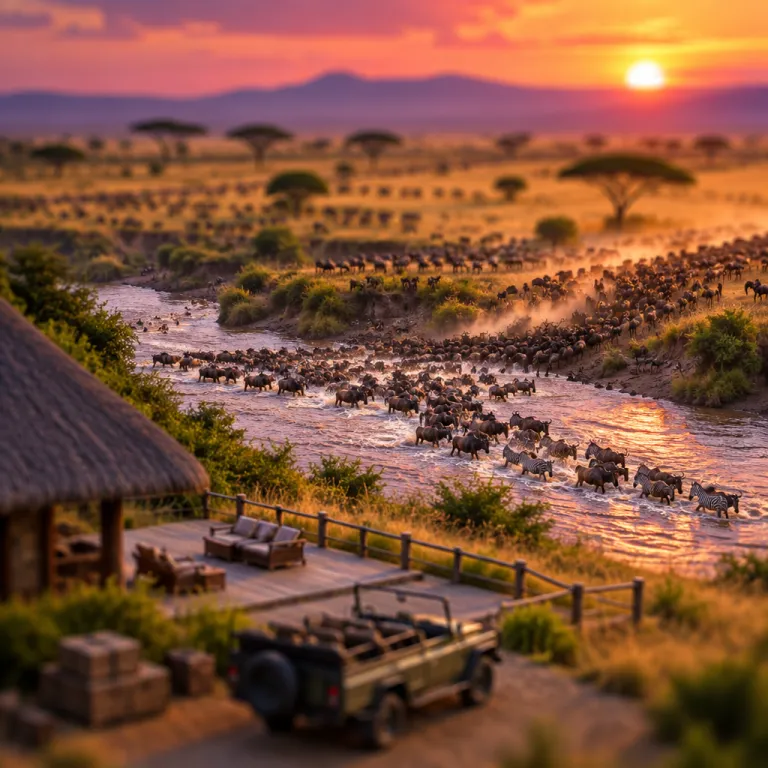
Reading the great migration calendar across the Serengeti and Mara
The great migration calendar for the Serengeti and Masai Mara is not a single date on a brochure but a moving, breathing circuit. To use any migration timetable for the Serengeti–Masai Mara intelligently, you need to think in arcs of weather, grass growth, and predator pressure rather than fixed weeks, because the herds respond to rainfall more than to human schedules. This is where a luxury migration safari becomes less about chasing a checklist and more about positioning yourself along the route with the right camp at the right month.
Ecologists estimate that approximately 1.3–1.5 million Wildebeest, 400,000–500,000 Zebras, 200,000 Gazelles and countless predators shape this annual migration across the wider Serengeti–Mara ecosystem, figures broadly supported by long‑term monitoring from the Tanzania Wildlife Research Institute (TAWIRI) aerial census work and Serengeti National Park authorities, as well as studies such as Mduma, Sinclair & Hilborn (1999) on Wildebeest dynamics. That moving biomass flows between Serengeti National Park in Tanzania and the Masai Mara National Reserve in Kenya, creating a continuous loop that defines every safari season, every river crossing, and every rate sheet for high end camps. When you read any great migration calendar for the Serengeti–Mara circuit, remember it is a weather informed guide, not a guaranteed timetable.
Official timelines from park management and specialist operators describe a year round cycle with distinct phases that matter deeply for lodge selection. “When is the best time to see the Great Migration?” and “How long does the Great Migration last?” are often summarised as “July to October for river crossings; January to March for calving season” and “It is a continuous, year‑round cycle,” and those two sentences should anchor how you think about your own migration safari. The art is to match your preferred style of wildlife drama, from quiet calving season scenes in the south Serengeti to intense Mara River crossings in the north Serengeti, with the right level of comfort and privacy in camp; as one long‑time guide in the central Serengeti puts it, “You are not chasing the herds, you are choosing which chapter of their story you want to sit inside.”
January to May: southern Serengeti calving season and the western corridor shift
From January to March, the southern Serengeti and the Ndutu plains become the nursery of the migration, and this calving season is the most intimate chapter of any great migration calendar focused on the Serengeti and Masai Mara. Here the herds spread across the south Serengeti short grass plains, Wildebeest dropping calves in their hundreds of thousands while Zebras and Gazelles form looser rings around them, and predators like Lions, Cheetahs, and Hyenas patrol the edges of this living nursery. For couples who prefer long, quiet game drives over high adrenaline river crossings, this southern Serengeti phase is often the best season to book a migration camp with generous space, strong guiding, and fewer vehicles at each sighting, accepting that dramatic river action will come later in the year.
Most mobile migration camps position themselves in the south Serengeti or the greater Ndutu area during this early month window, while some permanent camps in central Serengeti wait for the herds to drift north. Well‑known seasonal camps such as Serengeti Under Canvas or Lemala Ndutu Tented Camp typically anchor here, while year‑round bases like Serengeti Serena Safari Lodge or Asilia’s Dunia Camp provide continuity further north. A smart migration safari strategy is to split your stay between a southern Serengeti camp for calving season drama and a central Serengeti camp that offers year round resident game, especially if your travel dates fall late in March when the herds may already be nudging north. If you are balancing budget and comfort, pairing a high end migration camp with a more accessibly priced property, similar in spirit to value focused stays that free funds for experiences rather than marble lobbies, can release budget for a private vehicle, specialist guiding, or a longer stay.
By April and May, the migration usually pushes through central Serengeti toward the western corridor, following fresher grass and the first hints of the Grumeti River. This is a transitional season with fewer crowds, where some of the best camps sit along the western corridor waiting for the Wildebeest migration to funnel through key crossing points on the Grumeti and smaller tributaries. Properties such as Singita Faru Faru Lodge, &Beyond Grumeti Serengeti River Lodge, and mobile outfits near the Grumeti Reserve often time their season to this movement. If you are reading a great migration calendar for the Serengeti–Mara with an eye for solitude, these shoulder months in central and western Serengeti can offer exceptional value, lower vehicle density, and a more contemplative safari rhythm.
June to October: northern Serengeti and Masai Mara river crossings at peak demand
As June arrives, the herds typically gather in the northern Serengeti, compressing into denser lines that foreshadow the drama of the Mara River crossings. This is when the seasonal migration calendar for the Serengeti and Masai Mara becomes a game of precise timing, because a few days can separate quiet riverbanks from the chaos of Wildebeest and Zebra plunging into the Mara River while Crocodiles wait below and Lions watch from the north Serengeti bluffs. For couples planning a migration safari in this season, the choice between a northern Serengeti migration camp and a property inside the Masai Mara National Reserve in Kenya will define your daily game drive routes, your border‑crossing logistics, and your exposure to crowds.
From July through October, the focus shifts firmly to the Masai Mara and the Mara River crossing points, and this is when lodge rates across the Mara National Reserve and adjacent conservancies reach their highest levels. Peak Mara River crossings from August to October command the highest lodge prices in East Africa, and availability at the best camps near the river crossings often disappears a year in advance, especially for river facing tents and private vehicles. Flagship properties such as Governors’ Camp, Angama Mara, and &Beyond Kichwa Tembo in the reserve, or Mara North, Olare Motorogi, and Naboisho conservancies just outside, illustrate how location and vehicle density shape the experience: being closer to the river can mean shorter drives but more vehicles at each sighting, while conservancies trade slightly longer access routes for capped vehicle numbers and quieter viewing.
Not every traveler needs to sit at the busiest Mara River crossing points to feel the power of the Wildebeest migration, and in fact many seasoned guides prefer quieter stretches of the river. An anti crowd strategy might base you in a northern Serengeti camp on the Tanzanian side for part of your stay, then move you to a conservancy bordering the Masai Mara National Reserve where vehicle numbers are capped and river crossings can be watched in relative calm. When you speak with your lodge or specialist, ask explicitly how their migration safari plan uses both northern Serengeti and Masai Mara access to balance drama, privacy, and driving times, and be honest about whether you would rather spend an extra hour on the road for fewer vehicles at the riverbank.
November onward: following the herds south and choosing lodges that move with them
Once the short rains arrive in Kenya, usually around November, the migration begins to peel away from the Masai Mara and drift back through the eastern and central Serengeti. This return leg is often overlooked in many great migration calendars for the Serengeti and Masai Mara, yet it offers a gentler, more spacious safari where the herds are still impressive but the river crossings are largely behind them. For couples who value long, golden light drives and fewer vehicles, this late season can be one of the best times to combine a central Serengeti camp with a few nights in the south Serengeti as the Wildebeest migration arcs back toward its calving grounds.
The key strategic question is whether to choose a mobile migration camp that physically follows the herds or a fixed lodge that waits for the migration to pass through its area. Mobile camps in the south Serengeti, western corridor, and north Serengeti reposition several times a year, aligning their locations with the expected path of the herds, while permanent camps in central Serengeti and the Masai Mara National Reserve rely more on resident wildlife and the periods when the great migration passes nearby. If you enjoy the idea of a camp that feels like a temporary expedition base, a migration safari using mobiles can be ideal, whereas travelers who prefer more lodge like amenities may opt for fixed camps and accept that the herds might be a longer drive away on some days, trading immediacy for stability and deeper comfort.
Luxury lodge travelers who already appreciate seasonal positioning in other landscapes, such as choosing refined coastal cabins during storm watching season, will recognize the same logic at work here. The great migration calendar for the Serengeti and Masai Mara is ultimately a tool to align your preferred month, your tolerance for crowds, and your appetite for drama with the right combination of south Serengeti, central Serengeti, western corridor, north Serengeti, and Masai Mara stays. Book your safari six to twelve months ahead, be clear whether you want calving season, river crossings, or quieter in between weeks, and let that clarity guide your choice of national park, national reserve, and specific camps.
FAQ
When is the best time to see the great migration river crossings ?
The most reliable period for dramatic Mara River crossings is usually from August to October, when large herds concentrate along the Mara River in both the northern Serengeti and the Masai Mara. July can also deliver excellent crossings, especially in the north Serengeti, but timing varies with rainfall and grass conditions, as park authorities and long‑running operator reports regularly note. If your priority is to witness Wildebeest and Zebra plunging into the river, plan your migration safari around these months and book river focused camps early.
Which months are best for the southern Serengeti calving season ?
The calving season in the southern Serengeti and Ndutu plains typically runs from January through March, with a peak in February when most Wildebeest calves are born according to long‑term field observations and TAWIRI summaries. During this period, the herds spread widely across the south Serengeti short grass plains, attracting predators and offering intense but less crowded wildlife viewing. Travelers who prefer intimate predator prey interactions over river crossings often find this the best chapter of the great migration calendar for the Serengeti and Masai Mara.
Should I choose a mobile migration camp or a fixed lodge ?
Mobile migration camps move several times a year to stay close to the herds, which can reduce daily driving times and increase your chances of seeing key events like river crossings or calving. Fixed lodges in central Serengeti or the Masai Mara National Reserve offer more permanent infrastructure and amenities but may be farther from the core migration on some days. Couples who value flexibility and proximity to the herds usually prefer mobiles, while those prioritizing spa facilities, larger rooms, or easier logistics often choose fixed camps and accept slightly longer drives to reach the main concentrations of Wildebeest.
How far in advance should I book a migration safari in the Serengeti and Masai Mara ?
For peak Mara River crossing season between August and October, you should aim to book your preferred camps six to twelve months in advance, especially for small luxury properties near prime crossing points. Calving season in the southern Serengeti is slightly less pressured but still benefits from early planning, particularly if you want specific guides or private vehicles. Shoulder months in the western corridor or central Serengeti can sometimes be secured closer to departure, but availability at the best camps still tightens quickly, especially for river‑adjacent or conservancy locations.
Is the great migration a single event or a year round phenomenon ?
The great migration is a continuous, year round movement of Wildebeest, Zebra, and Gazelle across the Serengeti–Mara ecosystem, not a single event on one day. Different phases dominate different regions, from calving in the southern Serengeti early in the year to river crossings in the north Serengeti and Masai Mara later, then a gradual return south. When planning, think of a rolling calendar that shifts by region and season rather than one fixed moment, and use recent park updates or specialist operator reports to fine‑tune the likely location of the herds for your travel dates.